
Costa del Sol Property Market 2026: Record Prices, Strong Demand, and Limited Supply

Asking prices hit another all-time high in July 2026 — but annual growth has halved since last autumn, and foreign demand has just set a record.
Key Market Data
Record Prices, but Growth Is Slowing
The headline that matters in mid-2026 is not the record price — records have been set every month for over a year — but the rate of change behind it. Annual growth in Málaga province has fallen steadily from +14.0 % in September 2025 to +7.6 % in July 2026. Prices are still climbing; they are simply climbing at roughly half the speed they were ten months ago.
| Month | Asking price € / m² | Monthly | Annual |
|---|---|---|---|
| July 2026 | 4,272 | +0.8 % | +7.6 % |
| June 2026 | 4,236 | +0.7 % | +7.6 % |
| May 2026 | 4,208 | +0.9 % | +7.8 % |
| April 2026 | 4,171 | +0.5 % | +8.7 % |
| March 2026 | 4,149 | 0.0 % | +9.6 % |
| February 2026 | 4,149 | +0.4 % | +11.0 % |
| January 2026 | 4,133 | +0.4 % | +11.7 % |
| December 2025 | 4,116 | +0.9 % | +12.2 % |
| November 2025 | 4,080 | +0.3 % | +12.2 % |
| October 2025 | 4,066 | +0.4 % | +12.5 % |
| September 2025 | 4,050 | +1.4 % | +14.0 % |
| August 2025 | 3,996 | +0.7 % | +13.9 % |
Source: Idealista asking-price index, Málaga province. Idealista revised its methodology in July 2026 and restated the back series, so these figures supersede those published earlier.
This is what a market normalising rather than correcting looks like. Month-on-month movements have compressed into a narrow +0.4 % to +0.9 % band, and March 2026 was flat outright. There is no month of decline in the series, but the acceleration that characterised 2023 to 2025 has clearly ended.
How Prices Have Evolved Since 2023
Spain publishes no official transaction-price statistics, so every figure below comes from either a valuation firm (Tinsa, Gesvalt) or a listings portal (Idealista). The two methods measure different things — what a surveyor certifies a home is worth versus what sellers are asking — so the levels are not directly comparable. The direction, however, has been the same across all of them for three years.
| Reference point | Basis | € / m² | Annual change |
|---|---|---|---|
| Costa del Sol, Q1 2023 (Tinsa) | Valuations | 1,977 | +7.6 % |
| Costa del Sol, Q1 2023 (Gesvalt) | Valuations | 2,419 | +11.5 % |
| Málaga province, Q2 2026 (Tinsa) | Valuations | 2,703 | +15.05 % |
| Málaga province, Jul 2026 (Idealista) | Asking prices | 4,272 | +7.6 % |
Different providers, different methodologies and slightly different geographies — read each row on its own terms rather than as a single continuous series.
The most revealing detail in that table is the gap between the last two rows. Valuations are now rising at roughly twice the pace of asking prices, which is the reverse of the 2023 pattern. In a heating market sellers move first and surveyors follow; when valuations start closing the gap it means banks and appraisers have accepted the new price level as real rather than aspirational. For a buyer that is quietly good news, because mortgage valuations are less likely to come in below the agreed price.
It is also worth remembering where this run started. Tinsa placed Costa del Sol valuations roughly 22.6 % below the 2007 peak in early 2023, so a meaningful share of the subsequent rise was recovering ground lost after the last cycle rather than breaking genuinely new territory.
Where the Growth Has Been Strongest
Provincial averages hide very wide gaps. The July 2026 municipal breakdown shows a coast splitting into two speeds: the established prime addresses are now growing slower than the province as a whole, while the western and inland towns are posting double-digit gains.
| Municipality | Asking price € / m² | Annual change |
|---|---|---|
| Marbella | 5,950 | +4.6 % |
| Benahavís | 5,496 | +7.3 % |
| Estepona | 4,902 | +17.0 % |
| Fuengirola | 4,451 | +3.8 % |
| Istán | 4,242 | +28.2 % |
| Torremolinos | 4,218 | +11.1 % |
| Benalmádena | 4,175 | +7.5 % |
| Ojén | 4,169 | +6.2 % |
| Mijas | 3,684 | +8.9 % |
| Casares | 3,145 | −3.1 % |
| Manilva | 3,029 | +12.7 % |
Source: Idealista asking-price index, July 2026. Málaga province average for comparison: €4,272/m², +7.6 %.
Marbella remains by some distance the most expensive municipality on the coast at €5,950/m², but its +4.6 % is now the second-weakest reading in the table. Estepona at +17.0 % is growing almost four times as fast, and inland Istán — a small market where a handful of listings can move the average sharply — leads at +28.2 %. Casares is the only municipality in the group showing an annual decline.
For context, the same index in April 2023 put Marbella at €4,138/m², Benahavís at €3,981 and Estepona at €2,993. Estepona has therefore added roughly 64 % in a little over three years against Marbella’s 44 % — the westward shift is not a forecast, it has already happened.
What’s Driving the Market
Where the Demand Is Concentrated
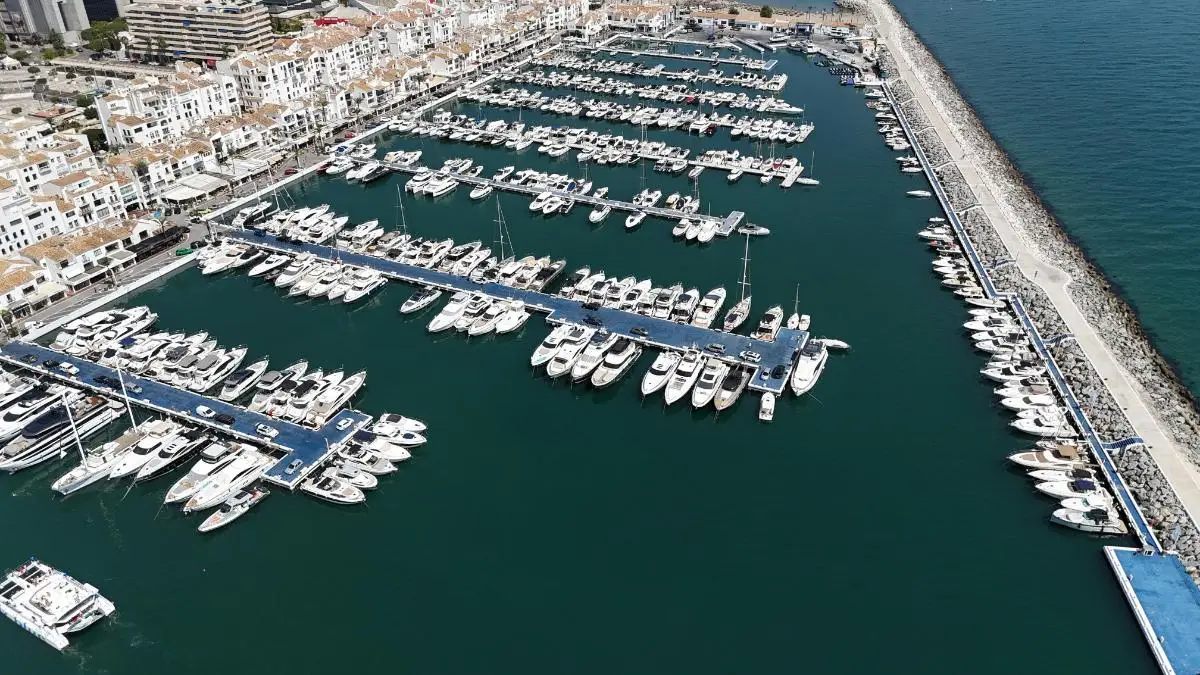
Demand on the Costa del Sol is not evenly spread. A handful of micro-markets absorb a disproportionate share of both the transactions and the price growth, and each one attracts a distinct type of buyer.
Implications for Buyers & Sellers
What Could Change the Trajectory
A market this strong invites the obvious question: what would have to happen for it to turn? Four things are worth watching, and none of them is a price crash.
Outlook for 2026
Costa del Sol Property Market: Common Questions
Q.Are property prices on the Costa del Sol still rising?
Yes, but more slowly than they were. Asking prices in Málaga province reached €4,272 per square metre in July 2026, an all-time high and 7.6 % above a year earlier. The important detail is the trend in that percentage: annual growth has fallen from 14.0 % in September 2025 to 7.6 % in July 2026. There has been no month of outright decline, but the acceleration of the 2023 to 2025 period has ended and monthly gains have settled into a narrow 0.4 % to 0.9 % range.
Q.Why is there so much demand for Costa del Sol property?
Foreign demand is the main engine and it is at a record. Buyers from abroad completed 51,627 purchases across Spain in the first half of 2026, the strongest H1 the Land Registrars have recorded, and made up 15.98 % of all sales in the second quarter — also a record. Domestic purchases fell 3 % over the same period, so the two markets are moving in opposite directions. Add genuinely constrained coastal land supply and a season that now runs year-round, and the imbalance is structural rather than cyclical.
Q.What is the average price per square metre on the Costa del Sol?
It depends entirely on which measure you use. Asking prices across Málaga province averaged €4,272 per square metre in July 2026 according to Idealista, while Tinsa valued the same province at €2,703 per square metre in Q2 2026. Neither is wrong — one is what sellers want, the other is what a surveyor will certify to a bank. Within the province the spread is enormous: Marbella sits at €5,950 per square metre and Manilva at €3,029.
Q.What rental yield can you expect on the Costa del Sol?
Less than you might expect from a market this popular. Gross yields average 5.45 % across Spain but 4.80 % in Málaga and 4.67 % in Marbella, so the coast underperforms the national average on income while outperforming it on capital growth. Net yields are typically 1.5 to 2 percentage points below gross once taxes, fees and maintenance are deducted. Any projection also has to reflect the current tourist-rental licensing rules, which determine what a property can legally earn.
Q.Is now a good time to buy on the Costa del Sol?
The market has become less of a race than it was in 2024. Growth at 7.6 % rather than 14 % means less pressure to decide in a day, and valuations rising faster than asking prices reduce the risk of a mortgage appraisal coming in short. Against that, prices are at record levels in every coastal municipality bar one, so nothing is cheap. For a five-year-plus horizon the structural case is intact; for a short-term trade the margin has thinned considerably. The larger risks now are regulatory rather than financial.
Q.Which Costa del Sol areas are growing fastest?
The western and inland municipalities, decisively. In the year to July 2026 Istán rose 28.2 %, Estepona 17.0 %, Manilva 12.7 % and Torremolinos 11.1 %, while Marbella managed 4.6 % and Fuengirola 3.8 % — both below the provincial average. Casares was the only municipality in the group to fall, at −3.1 %. Marbella and Benahavís remain far ahead on absolute price per square metre, but the growth has moved west.
Spain publishes no official transaction-price statistics, so every price on this page is either an asking price or a professional valuation, and is labelled as such. Idealista revised its methodology in July 2026 and restated its historical series; figures quoted here follow the revised series. Where a figure carries a date, that is the period the source measured, not the date this page was last updated.
Interested in a Data-Driven Property Selection?
We curate the best off-plan and ready-to-move properties along the Costa del Sol, matching verified quality and developer reliability.
Or browse the current new developments on the Costa del Sol.